
You worked all day. You laid down tired. You woke up sore — and not the good kind of sore. Your hip aches, your shoulder feels like somebody stood on it all night, and by noon you're popping ibuprofen just to get through the shift. That's not aging. That's not 'just how it is.' Nine times out of ten, that's your mattress.
Hip and shoulder pain on waking is one of the clearest signals your body can send: the surface you're sleeping on isn't letting your joints sink where they need to, and it isn't holding your spine where it should. The fix isn't a pill, a brace, or a $400 ergonomic pillow. It's a mattress that actually does its job.
"Pressure pain at the hip and shoulder on waking is a hallmark of a mattress that is too firm for the sleeper's weight and sleep position. The joint never gets a chance to unload."
— Sleep research consensus, summarized by the Sleep Foundation
Why the Hip and Shoulder Take the Hit
Your hip and shoulder are the two widest, hardest points on your body when you lie down — especially on your side. On a mattress that's too firm, they can't sink in, so they bear nearly all your weight all night long. Blood flow gets pinched off, the joint capsule stays under load, and the muscles around it brace to protect it. You wake up stiff, sore, and sometimes numb.
It's worse for people who carry their weight in their shoulders and hips — which is most men who do physical labor. A lineman, a welder, a ranch hand, an infantry veteran: broad shoulders, solid hips, and a mattress built for a 120-pound back-sleeper in a showroom. That mismatch is the whole problem.
What a Pain-Relieving Mattress Actually Does
- Lets the shoulder and hip sink: the comfort layers up top need to be soft and thick enough that the joint can drop below the level of your spine, taking the pressure off the joint capsule.
- Fills the waist gap: your waist is narrower than your shoulders and hips, so the mattress has to push UP into the waist to keep the spine straight. A mattress that's all soft sags; all firm bridges. You need both.
- Holds the spine level: the support core underneath has to resist sagging under your heaviest parts so your lower back doesn't bow all night.
- Stays flat over time: a mattress that develops a body impression in six months puts you right back in a hole — and right back in pain.
Firmness: Softer Than You Think
Here's where a lot of tough guys get it wrong. They walk into a mattress store, punch a bed, say 'I want firm,' and walk out with a slab that destroys their shoulders and hips. 'Firm' is not the same as 'supportive.' A mattress can be supportive and still let your joints sink. In fact, for hip and shoulder pain, it has to.
For most adults dealing with joint pain — especially side sleepers — the sweet spot is a medium to medium-firm feel, around 5 to 6.5 on the 10-point scale. That's firm enough to hold the spine up, soft enough to unload the joints. Bigger folks (230+ lbs) go a touch firmer so they don't bottom out through the comfort layers into the hard support core.
- Under 150 lbs: medium-soft to medium (4–5.5) — you need the give
- 150–230 lbs: medium to medium-firm (5–6.5) — the all-around sweet spot
- Over 230 lbs: medium-firm (6–7) with strong coil support underneath
Why a Quilted Hybrid Beats Slab Foam for Joint Pain
All-foam beds contour, but they come with two problems that hit joint-pain sufferers hard. First, deep foam can swallow the shoulder so far you feel trapped and fight the bed every time you roll — which keeps muscles tense all night, the opposite of relief. Second, cheap foam develops a permanent crater under the hip within a year, and a cratered mattress pulls the spine out of line and grinds the joint all night long.
A quilted hybrid solves it from both sides. The quilted comfort surface and responsive comfort layers cushion the shoulder and hip so the joint can unload. The individually wrapped coils underneath hold the spine level, push back with support exactly where you press hardest, and keep the mattress breathing so you don't cook in your own heat at the contact points. And a coil core holds its shape far longer than foam alone — so the relief you feel in month one is still there in year five.
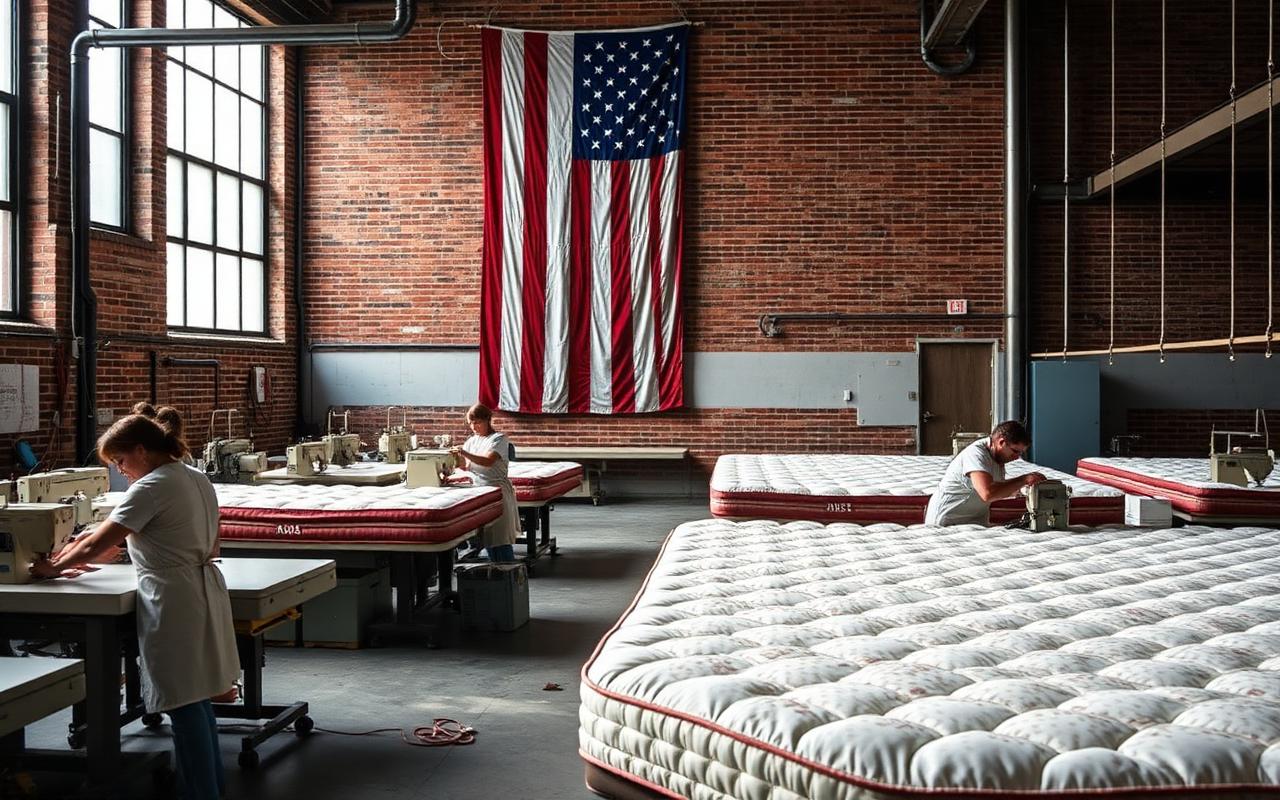
"The Patriot Bed is a 12-inch quilted hybrid: a plush quilted surface for pressure relief over individually wrapped coils that hold your spine level — built in the USA, fiberglass-free, GREENGUARD Gold certified."
— Patriot Bed Mission Specs
The Veterans and Tradesmen Angle
This matters double for the people we build for. Combat veterans carry shoulder, back, and hip damage the rest of us don't — from ruck marches, from IED concussions, from sleeping on cots and cots and cots. Tradesmen beat up the same joints on a job site every day. A mattress that doesn't unload those joints isn't a comfort issue for these folks — it's a recovery issue. Bad sleep means a bad back tomorrow, and a bad back on a job site or a patrol is a real problem.
If that's you, stop sleeping on a hand-me-down slab. Stop sleeping on the cheap foam bed that cratered in a year. Get something built to take weight off the joints and hold its shape. Your body has earned the recovery.
The Pillow Matters Too
A bad pillow can undo a good mattress. Side sleepers with shoulder pain need a taller, firmer pillow — your head has to bridge the full distance from the mattress to your shoulder so the neck stays neutral. A flat pillow drops the head and loads the shoulder even more. And tuck a pillow between your knees to keep the hips square and take torque off the lower back and the downhill hip.
Hip & Shoulder Pain Checklist Before You Buy
- Quilted comfort surface thick enough to let the shoulder and hip sink — not a thin cover over hard support
- Medium to medium-firm feel — supportive, not rock-hard
- Individually wrapped coils that contour and hold the spine level
- Reinforced edges so sitting on the side doesn't collapse the whole bed
- Fiberglass-free and GREENGUARD certified — you breathe this air 8 hours a night
- A real trial period: your joints need 2–4 weeks to adjust to proper support, so never buy a mattress you can't return
- A warranty that covers body impressions — a cratered mattress puts the pain right back
The Bottom Line
Hip and shoulder pain on waking isn't something you have to live with. It's a signal that your mattress isn't letting your joints unload and isn't holding your spine level. Fix the surface — quilted pressure relief up top, coil support underneath, medium firmness, built to last — and the morning soreness goes with it. That's exactly how we built The Patriot Bed. Stop fighting your bed. Start waking up ready to work.
Sources & Further Reading
Written by Patriot Bed Editorial. Patriot Bed Mattress Co. — Handcrafted in the USA.
Reading is the start. Sleeping is the mission. Build your rack American.
Shop The Patriot Bed