
Why Sciatica Turns Your Nights Into a War
Sciatica isn't regular back pain. It's the sciatic nerve — the longest nerve in your body — getting pinched or irritated, shooting electric jolts from your lower back down through your hip, butt, and leg. One wrong twist in bed and you're awake at 3 AM feeling like someone stuck a cattle prod in your spine. If you've spent years lifting, hauling, or wearing a pack, you already know the feeling.
Here's the part most mattress shops won't tell you: a mattress can't cure sciatica. What it can do is stop making it worse. The right bed keeps your spine in line so the nerve isn't getting squeezed, holds your hips and shoulders without pressure points, and lets you stay in one position without flopping around all night. That's the whole game.
What a Sciatica-Friendly Mattress Actually Does
Three things matter, and only three:
- Neutral spine alignment. Your lower back shouldn't sink in or arch up. It should rest flat and supported, the way it sits when you're standing tall.
- Pressure relief at the hip and shoulder. If you sleep on your side, those joints take the load. They need to sink in just enough to keep the spine straight — not so much that you fold up like a pocket knife.
- Motion isolation. If you toss because of pain, your partner shouldn't get launched across the bed. A mattress that transfers every movement keeps you both awake and makes the nerve pain worse.
Firm, Soft, or Somewhere in Between?
Sciatica sufferers tend to drift to one of two extremes — rock-hard firm or pillow-top cloud — and both can backfire. A mattress that's too firm puts all the pressure on the hip and shoulder, which can irritate the nerve on contact. One that's too soft lets your hips sink, pulling the spine out of line and pinching the nerve from a different angle.
The sweet spot is a medium-firm hybrid that has a responsive, quilted comfort layer sitting on top of a sturdy support core. The comfort layer gives your hip and shoulder somewhere to go; the support core holds the rest of you up. That balance is exactly what The Patriot Bed was engineered around.
Why a Hybrid Beats an All-Foam Bed for Sciatica
Memory foam has a reputation as the 'pain relief' mattress, and for some people it works. But all-foam beds have a problem: they let heavy parts (your hips) sink too far while lighter parts (your waist) float, which can torque the lower spine. For sciatica, that's a recipe for a 4 AM wake-up call.
A hybrid gives you the pressure relief of foam and quilting up top, plus a steel coil support system underneath that pushes back evenly and keeps the spine level. The Patriot Bed's individually wrapped coils also isolate motion — so when the nerve pain makes you shift, your partner sleeps through it.
Sleep Position Matters Too
Your mattress is half the battle; how you lie on it is the other half.
- Back sleepers get the easiest ride — spine stays naturally aligned. Just don't stack pillows so high your chin hits your chest.
- Side sleepers need a mattress with real give at the hip and shoulder. A medium-firm hybrid with a quilted top does this well.
- Stomach sleepers — honestly, if you've got sciatica, train yourself off this. It cranks the lower back into extension and can fire up the nerve. If you can't quit, use the flattest pillow you can stand.
The Patriot Bed, Built for the Long Haul
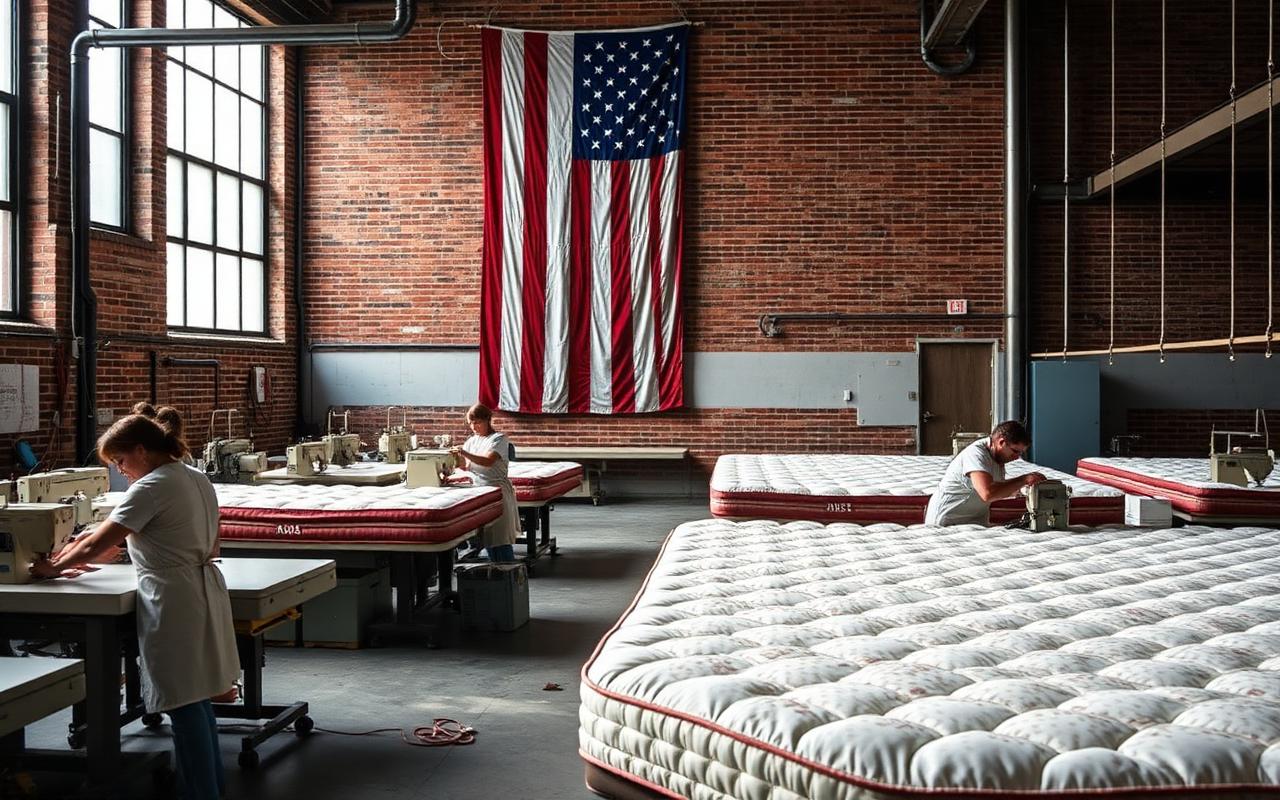
We built The Patriot Bed as a 12-inch Anniversary Quilted Hybrid because that profile hits the balance sciatica needs: enough cushion up top to cradle the hip and shoulder, enough steel underneath to hold the spine level. The quilted comfort surface eases pressure points; the responsive coil support system keeps you from sinking in too deep. Motion isolation means your pain-driven tossing doesn't wreck your partner's night.
It's GREENGUARD certified, which means it's been tested for chemical emissions — no off-gassing smells that make you regret your purchase on night one. Made in the U.S.A., built to last, and backed by a warranty that means what it says.
Other Things That Help (Because a Mattress Alone Won't Fix It)
- A pillow between your knees if you're a side sleeper — it levels the hips and takes torque off the lower spine.
- A knee wedge if you sleep on your back — slightly bent knees reduce pressure on the sciatic nerve.
- Stay off your stomach. We said it already. We'll say it again.
- Keep moving during the day. Gentle walking and hamstring stretches take pressure off the nerve. A good bed helps you sleep, but it doesn't replace movement.
The Bottom Line
Sciatica is a nerve problem, and a mattress can't un-pinch a nerve. But the wrong mattress will absolutely make it worse, and the right one can be the difference between a brutal night and a solid one. If you're dealing with that shooting pain and you've been sleeping on a sagging, lumpy, decade-old bed, it's time to retire it. The Patriot Bed was built to hold your spine level, cushion the joints that load up, and keep you sleeping through the night — the way an American bed should.
Sources & Further Reading
Written by Patriot Bed Editorial Team. Patriot Bed Mattress Co. — Handcrafted in the USA.
Reading is the start. Sleeping is the mission. Build your rack American.
Shop The Patriot Bed