
Somewhere between half and three-quarters of American adults sleep on their side, making it by far the most common sleep position in the country. It's also the position most mattress companies quietly fail. Lie on your side on the wrong mattress and your shoulder gets jammed, your hip takes the full weight of your torso, and your spine bows like a cheap shelf. You wake up with a numb arm, a sore hip, and a bad attitude.
"Side sleeping is the most common sleep position among adults, and the one that places the greatest demand on pressure relief at the shoulder and hip."
— Sleep research consensus, summarized by the Sleep Foundation
The good news: picking the right mattress for side sleeping isn't complicated once you know what your body is actually asking for. This guide cuts through the marketing and gives it to you straight.
What Your Body Needs in the Side Position
When you sleep on your side, nearly all of your body weight concentrates on two small contact points: your shoulder and your hip. A mattress for a side sleeper has one job above all others — let those two points sink in far enough that your spine stays in a straight, neutral line from your neck to your tailbone.
- Pressure relief at the shoulder: if the surface is too firm, your shoulder can't sink and the pressure cuts circulation — that's the numb arm at 3 a.m.
- Pressure relief at the hip: hips are the heaviest part of most bodies; they need contouring, not resistance.
- Support in the waist gap: your waist is narrower than your shoulders and hips, so the mattress has to push UP there while giving at the contact points. A mattress that's all soft sags the spine; all firm bridges it.
- Straight spine: lie down and have someone look at your back from behind. Your spine should run in one clean horizontal line.
Why Firmness Is Where Most Side Sleepers Go Wrong
The mattress industry spent decades selling 'firm is better for your back.' That advice was aimed at back sleepers, and it's wrong for a lot of side sleepers. On a rock-hard bed, a side sleeper's shoulder and hip can't sink at all — the spine curves upward toward the waist gap, muscles brace all night to compensate, and you wake up stiffer than when you laid down.
For most side sleepers, the sweet spot is medium to medium-firm — roughly a 5 to 6.5 on the 10-point firmness scale. Lighter folks (under ~150 lbs) usually want the softer end of that range; heavier folks (230+ lbs) need the firmer end so they don't bottom out through the comfort layers into the hard support core.
- Under 150 lbs: medium-soft to medium (4–5.5)
- 150–230 lbs: medium to medium-firm (5–6.5)
- Over 230 lbs: medium-firm (6–7) with strong coil support underneath
Hybrid vs. All-Foam for Side Sleepers
All-foam mattresses can contour, but they come with two well-known problems for side sleepers: they trap heat around your body's biggest contact points, and deep foam can swallow the shoulder so far you feel 'stuck' and fight the bed every time you roll over. A cheap foam bed also develops a body impression fast — and a cratered mattress is a side sleeper's worst enemy, because it pulls the spine out of line all night.
A quilted hybrid solves it from both directions. The quilted comfort surface and responsive comfort layers cushion the shoulder and hip, while individually wrapped coils underneath hold the spine up, keep the mattress breathing, and push back with support exactly where you press hardest. You get the give where you need it and the backbone where you don't.
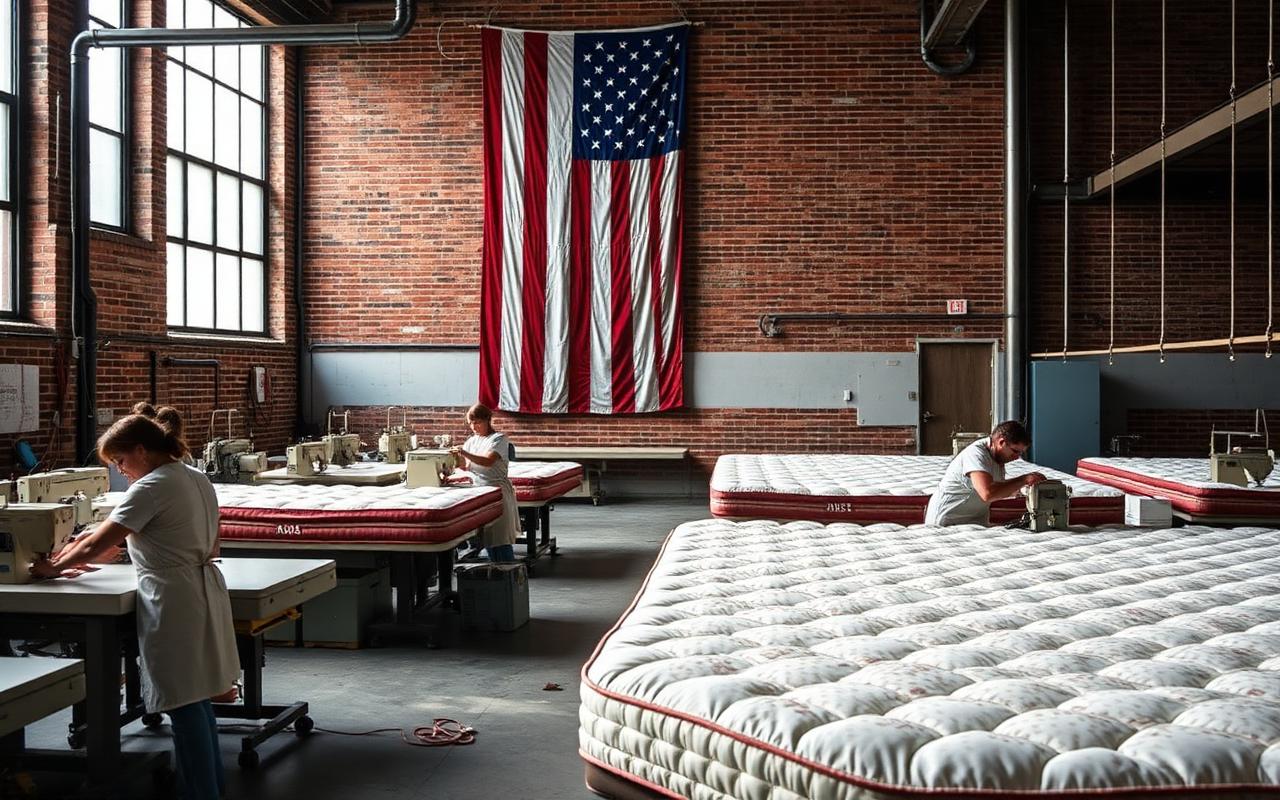
"The Patriot Bed is a 12-inch quilted hybrid: a plush quilted surface for pressure relief over individually wrapped coils that hold your spine level — built in the USA, fiberglass-free, GREENGUARD Gold certified."
— Patriot Bed Mission Specs
Side Sleeper Checklist Before You Buy
- Medium to medium-firm feel — firm enough to support, soft enough to let the shoulder sink
- Real comfort layers up top: quilted surface, responsive foam — not a thin cover over hard support
- Individually wrapped coils for contouring support and motion isolation if you share the bed
- Reinforced edges, so sitting on the side of the bed doesn't feel like falling off a dock
- A real trial period: your body needs 2–4 weeks to adjust to proper alignment, so never buy a mattress you can't return
- Fiberglass-free construction and GREENGUARD certification — you're breathing that air eight hours a night
Don't Forget the Pillow
Side sleepers need a taller, firmer pillow than back or stomach sleepers — your head has to bridge the whole distance from the mattress to your shoulder. A flat pillow kinks your neck downward all night and can undo the work of a good mattress. Aim for a loft that keeps your nose in line with the center of your chest, and tuck a pillow between your knees to keep your hips square and take torque off your lower back.
The Bottom Line
If you sleep on your side, you don't need a gimmick — you need a mattress that gives at the shoulder and hip, supports at the waist, and holds its shape year after year. That's exactly why we built The Patriot Bed the way we did: quilted pressure relief up top, American-made coil support underneath, and a trial period long enough for your spine to tell you the truth. Sleep on your side. Stand tall all day.
Sources & Further Reading
Written by Patriot Bed Editorial. Patriot Bed Mattress Co. — Handcrafted in the USA.
Reading is the start. Sleeping is the mission. Build your rack American.
Shop The Patriot Bed