For about a decade the mattress aisle got flattened into one answer: a foam rectangle in a cardboard box. Foam has real strengths. It also has real weaknesses that show up around year four, and nobody selling the box mentions them.
Memory Foam: What It's Good At
- Deep contouring and pressure relief at the hip and shoulder
- Excellent motion isolation
- Quiet — no coils, no noise
Memory Foam: Where It Falls Down
- Runs warm — dense foam traps body heat with nowhere to vent
- Soft, weak perimeters; sitting on the edge collapses it
- Can feel like sinking rather than being held, which stiffens some backs
- Body impressions develop and don't come back out
Hybrid: Coils Under Comfort
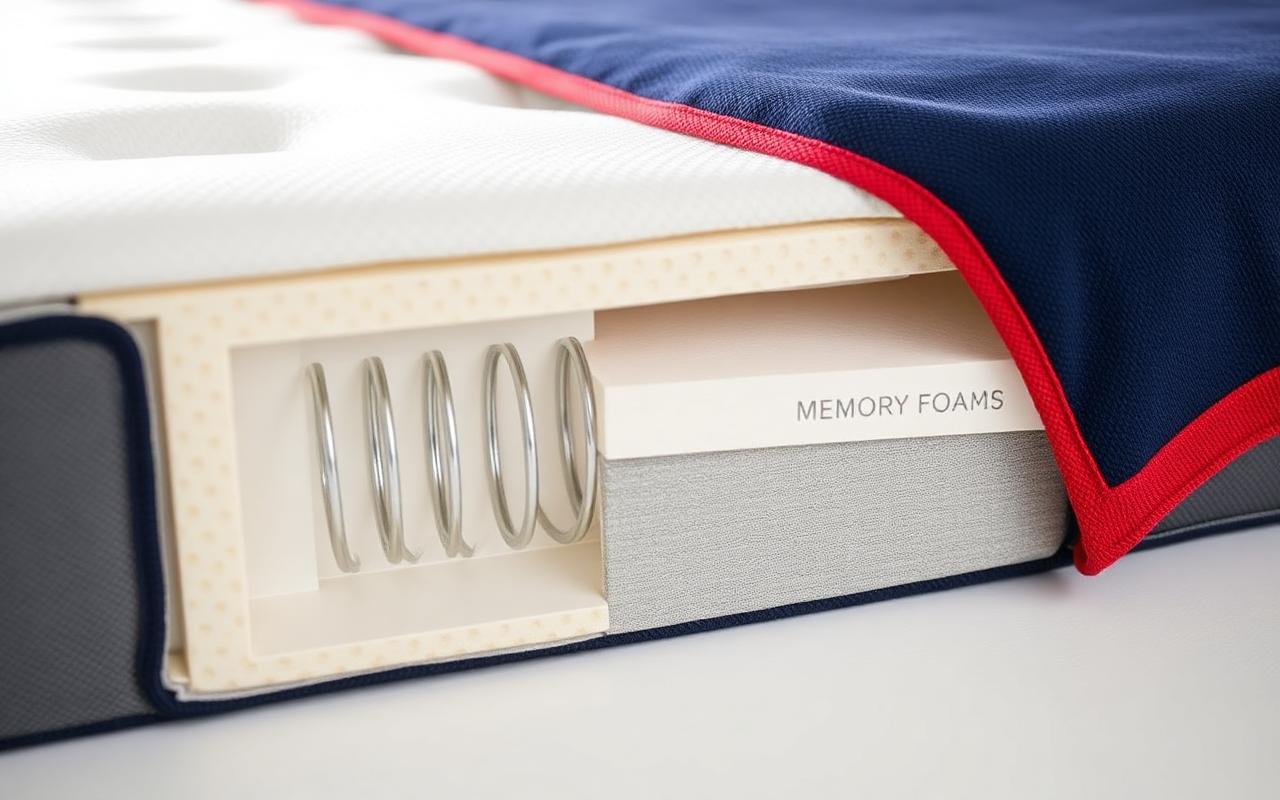
A hybrid runs comfort foam and quilted upholstery on top of a pocketed coil support system. You keep the contouring at the surface and get steel doing the structural work underneath. Air moves through the coil layer instead of sitting in a foam slab, and the perimeter can actually be reinforced.
Head to Head
- Cooling: Hybrid wins — the coil layer breathes
- Motion isolation: Roughly even — pocketed coils are individually wrapped
- Edge support: Hybrid wins clearly
- Bounce and ease of moving around: Hybrid
- Deepest sink-in hug: Memory foam
- Longevity under a heavier or hard-working body: Hybrid
Why We Build a Hybrid
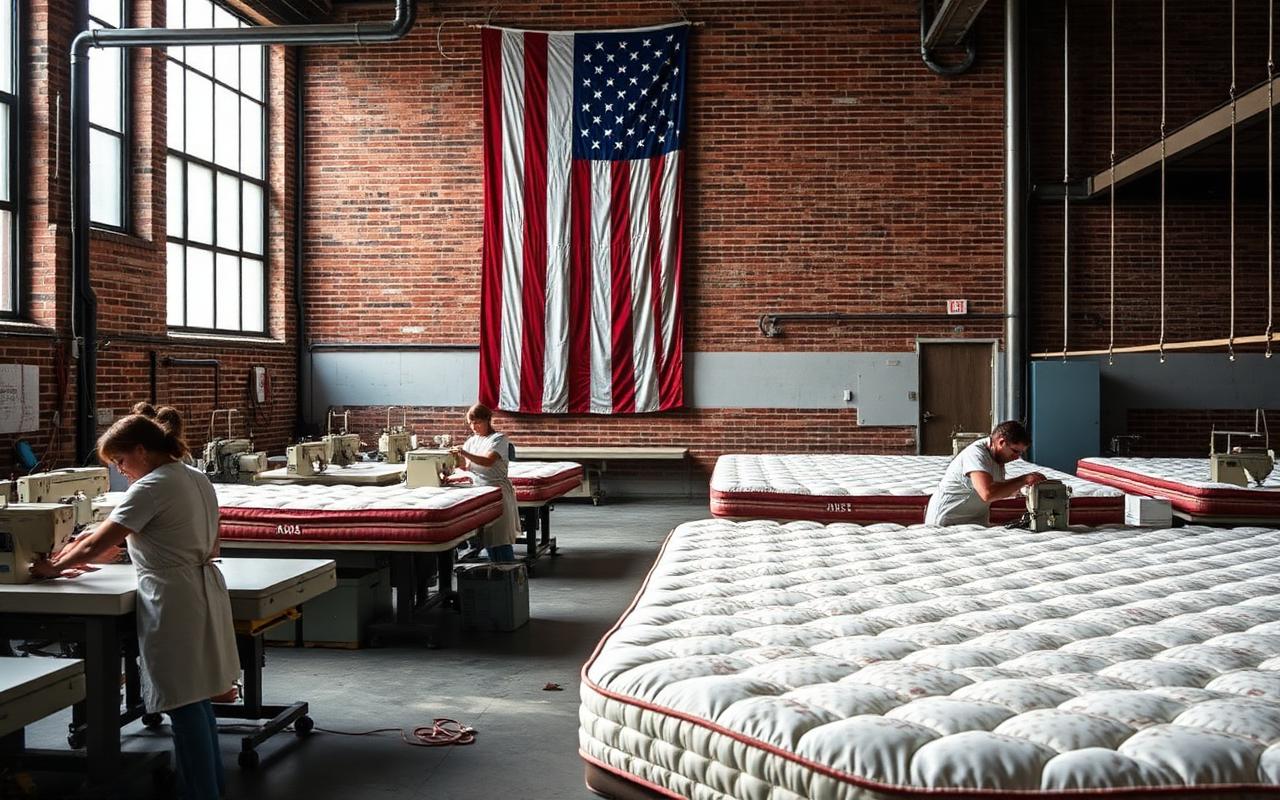
The Patriot Bed is a 12" quilted hybrid: a Euro-top quilted comfort surface over a responsive pocketed coil support system, with durable edge support and GREENGUARD-certified materials, handcrafted in the U.S.A. We build it that way because the people buying it aren't sedentary. They're on ladders, in trucks, on their feet, and carrying gear. That body needs support that doesn't quit at year three.
"Foam feels good in a showroom. Steel feels good in year seven."
— Patriot Bed
Written by Patriot Bed Editorial. Patriot Bed Mattress Co. — Handcrafted in the USA.
Reading is the start. Sleeping is the mission. Build your rack American.
Shop The Patriot Bed