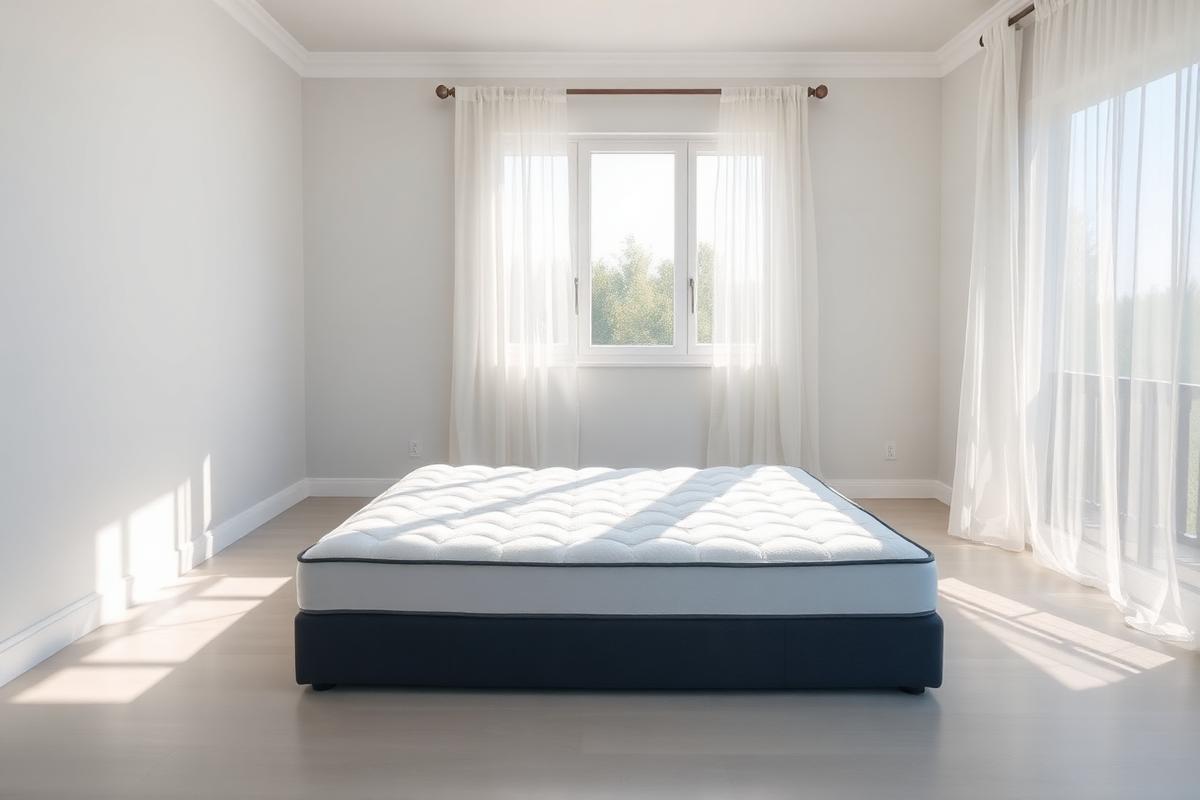
You cut the plastic, the mattress expands, and the room smells like a new car crossed with a tire shop. That's off-gassing. It's normal, it's temporary, and it's worth understanding — because the difference between a harmless smell and something you should care about comes down to one certification.
What Off-Gassing Actually Is
Off-gassing is the release of volatile organic compounds — VOCs — from manufactured materials. Foams, adhesives, and fabric finishes all contain compounds that evaporate at room temperature. Sealed in plastic for shipping, those compounds concentrate. Open the bag and they release all at once. That's the smell.
It is not unique to mattresses. New carpet, fresh paint, a new car interior, a new couch — same phenomenon. Mattresses just get singled out because you put your face on one for eight hours.
How Long Does It Last?
- Most of the smell clears in 24 to 72 hours with decent ventilation.
- Faint traces can hang on for up to a week or two, especially on all-foam beds in a closed room.
- Hybrids with coil cores generally clear faster than all-foam beds — there's less foam mass and more airflow through the structure.
- Heat and humidity speed up the release. A warm, well-ventilated room clears faster than a cold, sealed one.
How to Clear It Fast
- Unbox in the room where it'll live, and open the windows. Cross-ventilation is the whole game.
- Run a fan pointed at the mattress for the first day. Moving air beats still air by a wide margin.
- Give it 24 hours bare before you make the bed. Sheets and a protector trap the release.
- Turn the heat up a few degrees. Warmer air accelerates the process.
- Sprinkle baking soda over the surface, leave it a few hours, vacuum it off. Old trick, actually works on residual odor.
Should You Be Worried?
For most people, a short-lived new-mattress smell is a nuisance, not a hazard. But 'most people' isn't good enough if you're asthmatic, chemically sensitive, pregnant, or putting a kid on the bed. That's where certification stops being marketing and starts being useful.
GREENGUARD Gold is the standard that matters. It's third-party testing by UL against strict chemical emissions limits — over 360 VOCs — with thresholds set for sensitive populations, including children and the elderly. A product can't carry the mark without passing independent testing in a controlled chamber. It's not a self-declared 'non-toxic' sticker somebody printed on their own box.
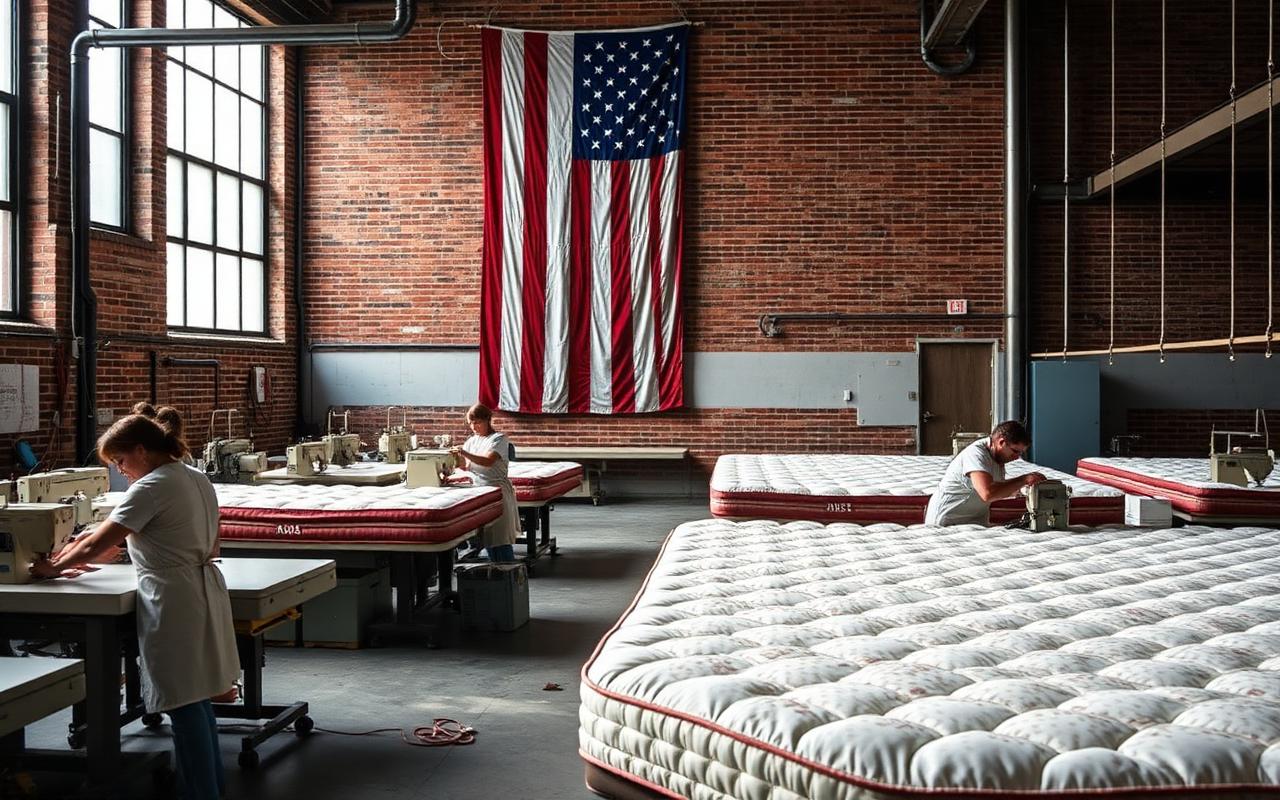
The Patriot Bed is GREENGUARD certified. It's also fiberglass-free — no glass-fiber fire sock hiding under the cover to shred your house if the zipper ever comes open. And it's built in the U.S.A., where we can see the materials going in.
What to Look For When You Shop
- GREENGUARD Gold or CertiPUR-US certification on the foams. Third-party tested, not self-declared.
- Fiberglass-free construction. Ask directly. Plenty of budget beds still use a fiberglass fire barrier.
- Made in the U.S.A. Domestic manufacturing means the materials are subject to U.S. regulation and the supply chain is short enough to verify.
- A brand that answers the question straight instead of saying 'our materials are safe' and moving on.
The Bottom Line
New mattress smell is off-gassing, it's normal, and it's gone in a couple of days with the windows open and a fan running. What matters is what's coming off — buy a bed with third-party certification and fiberglass-free construction, and the question stops being interesting. The Patriot Bed is GREENGUARD certified and built in America. Air it out for a day and get some sleep.
Sources & Further Reading
Written by Patriot Bed Editorial. Patriot Bed Mattress Co. — Handcrafted in the USA.
Reading is the start. Sleeping is the mission. Build your rack American.
Shop The Patriot Bed