If you came home and the sleep never came with you, you're not broken and you're not alone. Trouble falling asleep, waking up soaked at 0300, nightmares that replay things you'd rather not name — these are among the most common problems veterans with PTSD report, and they often outlast every other symptom.
This isn't a medical article and we're not doctors. We build mattresses. But we sell them to a lot of veterans, and we hear the same story enough times that it's worth putting down plainly: what's happening, what the research says helps, and what part of the problem a bed can actually solve.
Why Combat Rewires Sleep
Downrange, light sleep keeps you alive. Your body learns to stay half-awake — ears open, adrenaline near the surface, ready to move. That's not a defect; that's training and survival. The problem is that the switch doesn't automatically flip back when the plane lands.
- Hyperarousal. Your nervous system stays in a heightened state, so falling asleep feels like standing down when you're not sure it's safe to.
- Nightmares and night terrors. Trauma-related dreams disrupt REM sleep, which is when the brain does its emotional processing. Broken REM makes the next day harder, which makes the next night harder.
- Sleep avoidance. If sleep means nightmares, plenty of guys just stop going to bed. Then chronic sleep deprivation stacks on top of the PTSD.
- Comorbid conditions. Sleep apnea, chronic pain, tinnitus, and TBI are common in the veteran population and all of them fragment sleep independently.
What the Research Says Actually Helps
The two treatments with the strongest evidence behind them for veterans are Cognitive Behavioral Therapy for Insomnia (CBT-I) and Imagery Rehearsal Therapy (IRT) for nightmares. Both are non-drug, both are offered through the VA, and both have a real track record.
- CBT-I retrains the relationship between your bed and sleep — stimulus control, sleep restriction, and cutting the anxiety loop that keeps you staring at the ceiling. The VA offers it, and there's a free CBT-i Coach app.
- Imagery Rehearsal Therapy has you rewrite the nightmare while awake and rehearse the new ending. Sounds strange. It works for a lot of people.
- Prazosin is a medication some providers prescribe specifically for PTSD nightmares. Talk to your VA provider — that's a conversation for a doctor, not a mattress company.
- Screening for sleep apnea. If you snore, gasp, or wake up wrecked no matter how long you were down, get a sleep study. Untreated apnea will sink every other effort.
"If you're a veteran in crisis or having thoughts of suicide, call the Veterans Crisis Line: dial 988 then press 1, or text 838255. Someone is there 24/7."
— Veterans Crisis Line
Build a Bedroom That Feels Secure
Here's the part we can speak to directly. A lot of the advice out there — 'make your room dark and quiet' — misses the point for a combat veteran. The real goal isn't just comfort. It's a room your nervous system reads as secure, so it has permission to stand down.
- Control the entry. Position the bed so you can see the door. It sounds small. For a lot of guys it's the single biggest change.
- Consistent low-level sound. A fan or white noise machine keeps random noises from spiking you awake. Silence can be worse than steady sound.
- Cool and dark. Around 65 to 68 degrees, blackout curtains. Night sweats are common with PTSD — a cool room and breathable bedding help.
- Secure storage for a firearm. If you keep a weapon in the bedroom, a locked quick-access safe is the responsible answer — it keeps it out of the wrong hands and off the nightstand. Our Sleep Safe mounts under the bed for exactly that reason.
- A mattress that doesn't fight you. If you wake up already and the bed hurts, you're not going back down.
Where the Mattress Fits
A mattress won't treat PTSD. Anybody who tells you different is selling something. What a good bed does is remove one variable from a stack of them — so when you do get a window of sleep, pain and heat and a partner's movement aren't the things that take it away from you.
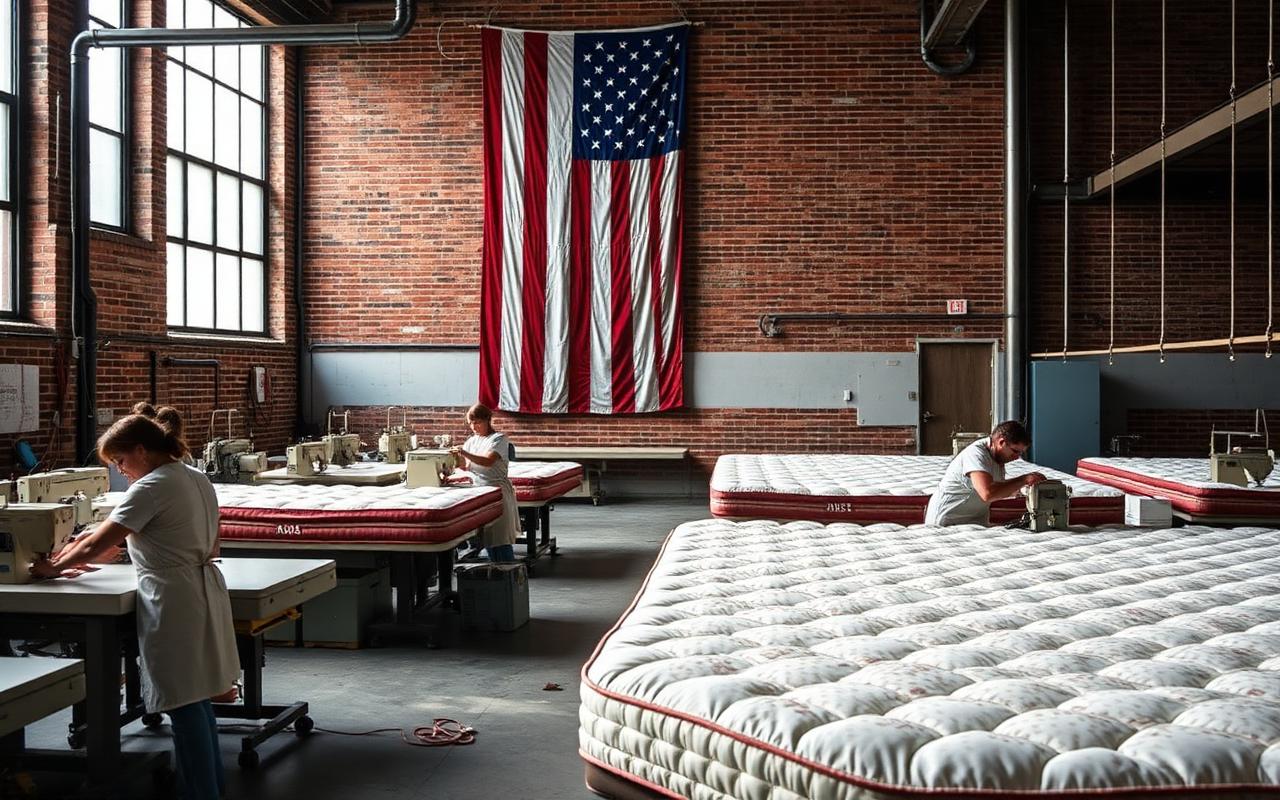
The Patriot Bed is a 12-inch Anniversary Quilted Hybrid: individually wrapped coils under a quilted comfort surface. The coil system isolates motion, so a restless partner or your own tossing doesn't ripple across the bed. The quilted top and coil airflow run cooler than a slab of memory foam, which matters if you sweat at night. And it's GREENGUARD Gold certified for low chemical emissions, built in the U.S.A. by American workers.
It's one piece of the picture. Get the treatment, get screened for apnea, and set up the room so your body believes it's safe. The bed is the part we can hand you.
The Bottom Line
Bad sleep after combat is one of the most common and most treatable pieces of PTSD, and it's the one too many veterans just live with. Talk to the VA about CBT-I and nightmare treatment. Get a sleep study if you snore. Set your room up so it reads as secure. And put yourself on a bed that stays cool, stays quiet, and holds the line all night. You held it for the country. Let something hold it for you.
Sources & Further Reading
Written by Patriot Bed Editorial. Patriot Bed Mattress Co. — Handcrafted in the USA.
Reading is the start. Sleeping is the mission. Build your rack American.
Shop The Patriot Bed