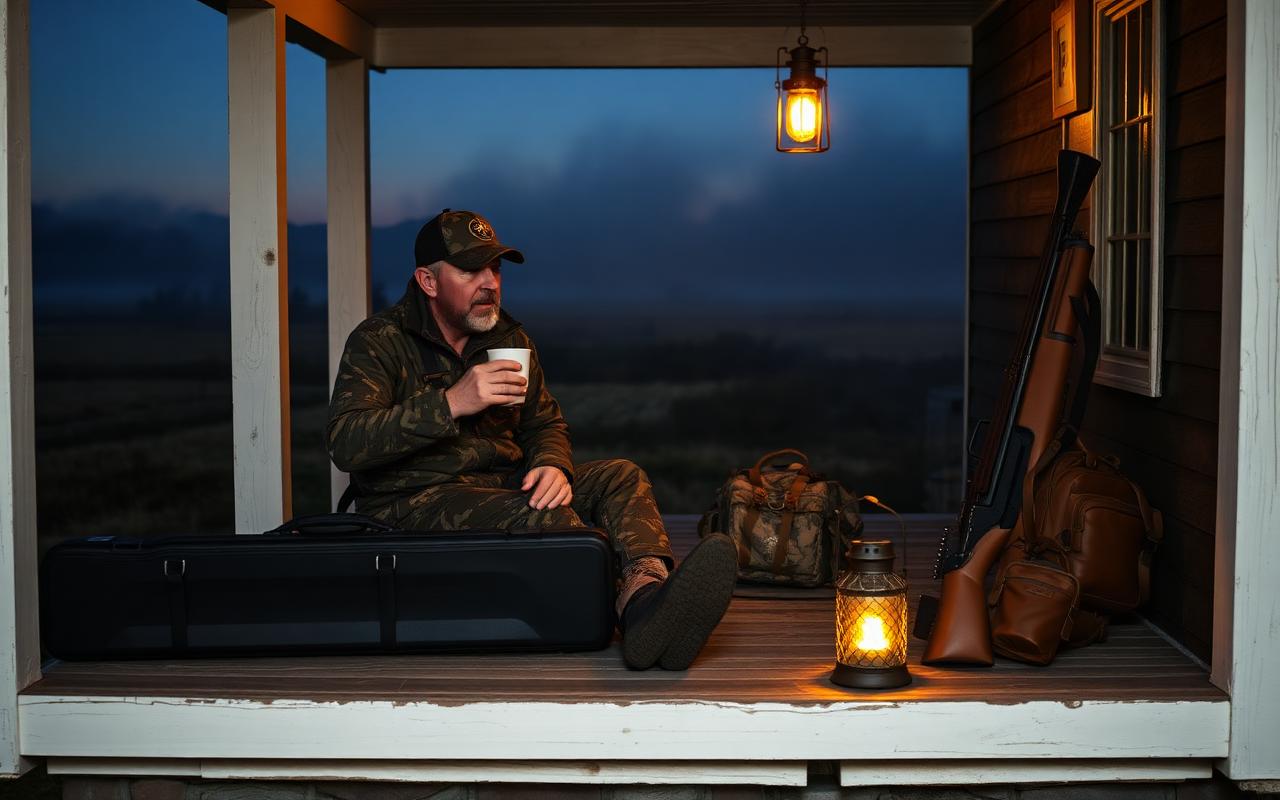
Every hunter knows the drill. You're in bed by nine, staring at the ceiling by ten, doing math on how many hours are left by eleven, and the alarm goes at four anyway. Then you're in the stand with shaky hands and a thermos doing all the work.
Bank It, Don't Borrow It
You can't make up sleep the morning of, but you can front-load it. Add an extra 45–60 minutes per night for the three nights before opening day. Sleep researchers call it sleep extension, and it measurably blunts the hit from one short night.
Shift the Clock Early
- Move bedtime back 20–30 minutes a night for three or four nights instead of two hours at once.
- Get bright light first thing in the morning during that shift week — it pulls your whole clock earlier.
- Dim the house after sunset. Screens at full brightness push your clock the wrong direction.
Cut the Obvious Sabotage
- No caffeine within eight hours of bed. That includes the afternoon energy drink on the drive up.
- Skip the nightcap. Alcohol shortens the time to fall asleep and wrecks the back half of the night.
- Eat earlier and lighter. Camp chili at ten o'clock is a choice with consequences.
- Lay out gear before you lie down. Half of hunt-eve insomnia is a running checklist.
Camp and Cabin Sleep
Cold, hard, and unfamiliar is a bad trio. A real pad, a mask, and earplugs beat toughing it out. If you're at the cabin, a decent bed is worth more than another rifle case — you'll use it every trip for twenty years.
The Night After Counts Too
The drive home after a 4 a.m. start on four hours of sleep is the single most dangerous part of the trip. Drowsy driving impairs reaction time in ways that feel manageable and aren't. Nap before you roll, or split the wheel.
Sources & Further Reading
Written by Patriot Bed Editorial. Patriot Bed Mattress Co. — Handcrafted in the USA.
Reading is the start. Sleeping is the mission. Build your rack American.
Shop The Patriot Bed